
Comparison of 10-meter and 7-meter masts for 20m activations
Before we look at antenna performance and radiation patterns, let’s look at the masts themselves. I don’t feel like I’m loyal to any particular brand, but I am loyal to things that work for me. I feel like I get really good value from Spiderbeam masts. They offer many, but two I gravitate towards are their 10m and 7m heavy duty models.
The Stowed Size
I’m not backpacking, but size still matters when stored in the car and walking to the table.
The 7m and 10m masts both fit in the car and neither have to lay across the seat. They can both be carried in one hand. The 10m doesn’t slip into the pack very well and the 7m has the added spike and pipe.
The Deployment
- Spike & pipe
- Stakes and guys.
The Versatility
Both masts are equally as versatile as your imagination allows. I’ve met success with:
- Tree leaner
- Park grill
- Fence post
- Park bench
- Car tire
Our question is, “What’s the difference in height mean to antenna performance?” Meaning gain and directionality. Let’s look at my goto wire antennas.
The Lineup
- 4010 EFHW Sloper
- 4010 EFHW Inv V
- 20m EFHW Sloper
- 29.5ft EFRW
- 20m Dipole Inv V
The Subjectivity: The human element.
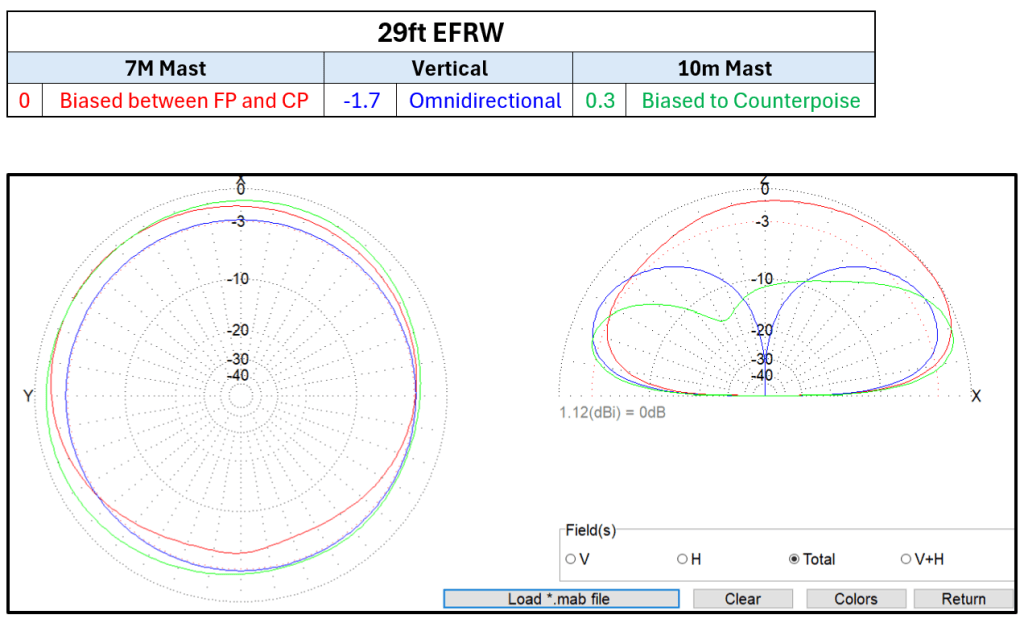
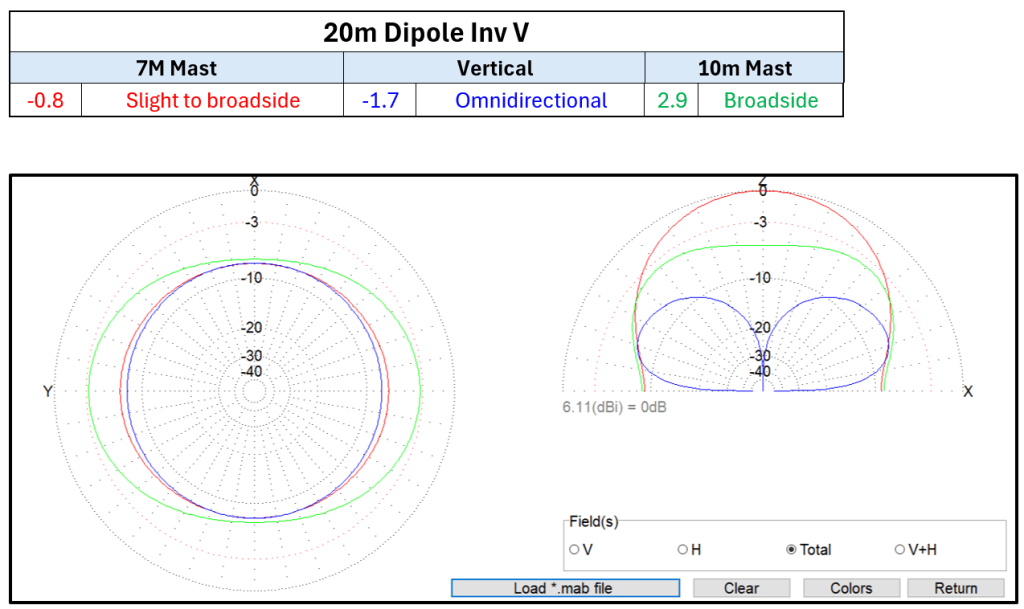
I’m always very challenged to translate antenna modeling to conclusions in the real world. What does .3 dBi really mean to the operating experience? To help with that, I’ve inserted the 20m vertical antenna between the opposing models. As we consider the difference between 7m masts and 10m masts, the humble ground mounted vertical can serve as control or point of familiar reference to baseline our subjective eyes.
Finally, antennas can send power in directions that don’t help. We’ll look at a radiation takeoff angles of 15 degrees of the horizon. Nine out of ten dentists recommend 15 degrees for the best DX.
The B.L.U.F Bottom Line Up Front
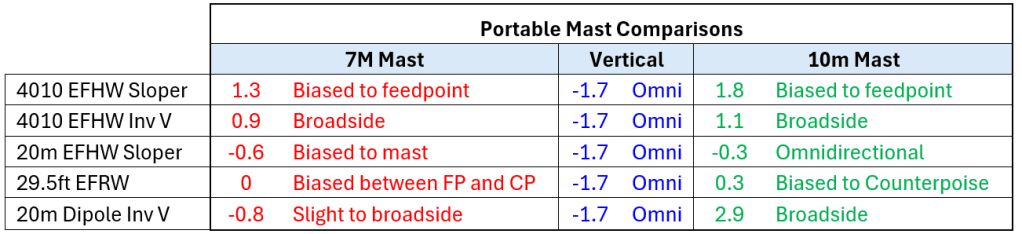
The number values are gain, expressed as dBi. I’ll give you a minute to look this over. Surprised? Disappointed? For me, I have to accept that my surprise and disappointment prove that solar weather has more to do with an activation than any antenna. For example, I just knew the 20m EFHW was far better than the 40m sloper or any random wire. Mmmm. Not according to these models. I was convinced the 4010 on the shorter 7m mast is little more than a cloud burner. Again – not according to this.
The Results
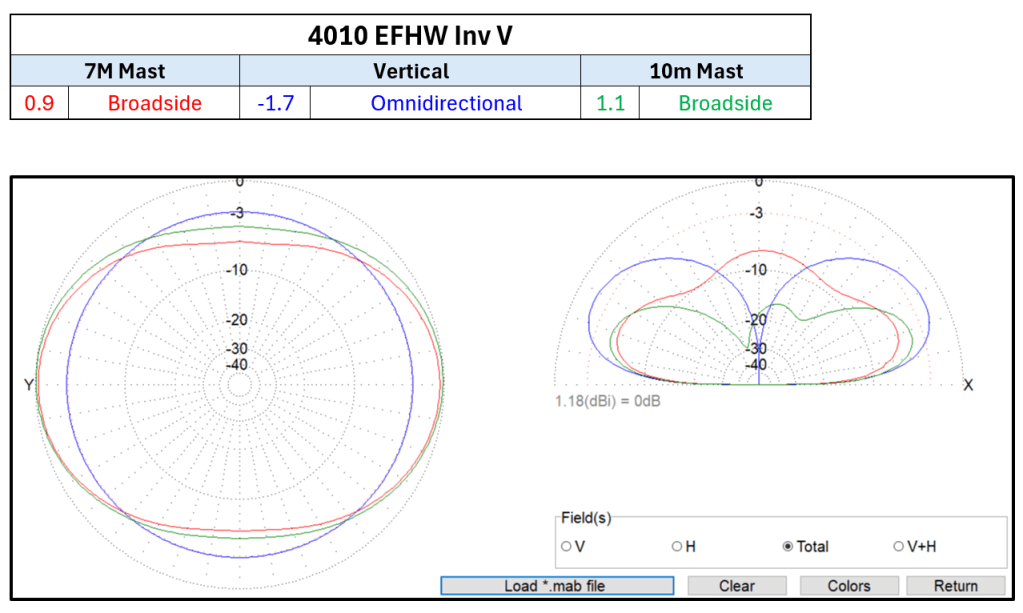
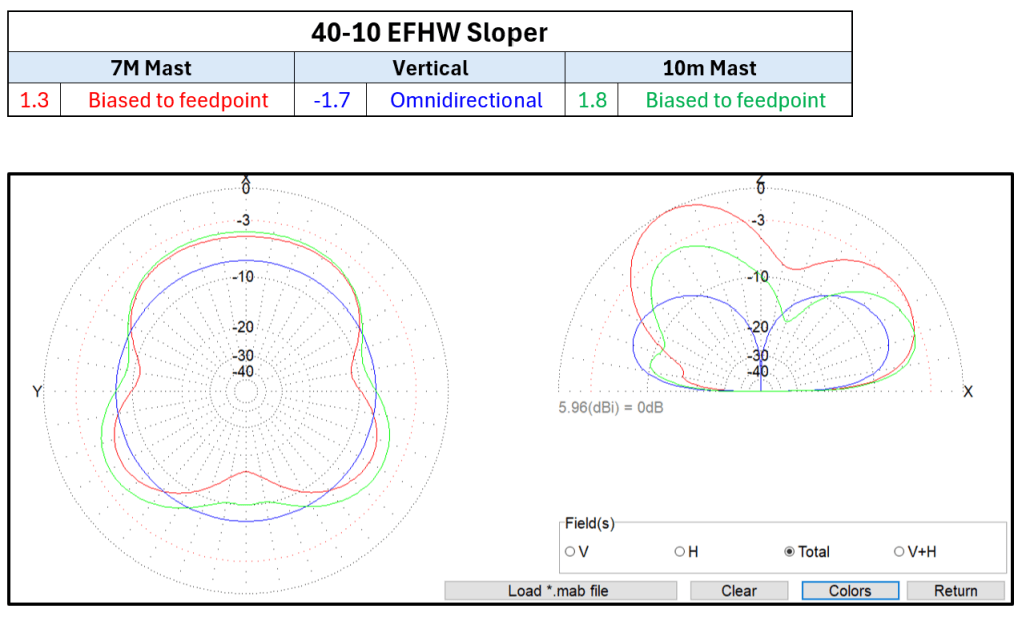
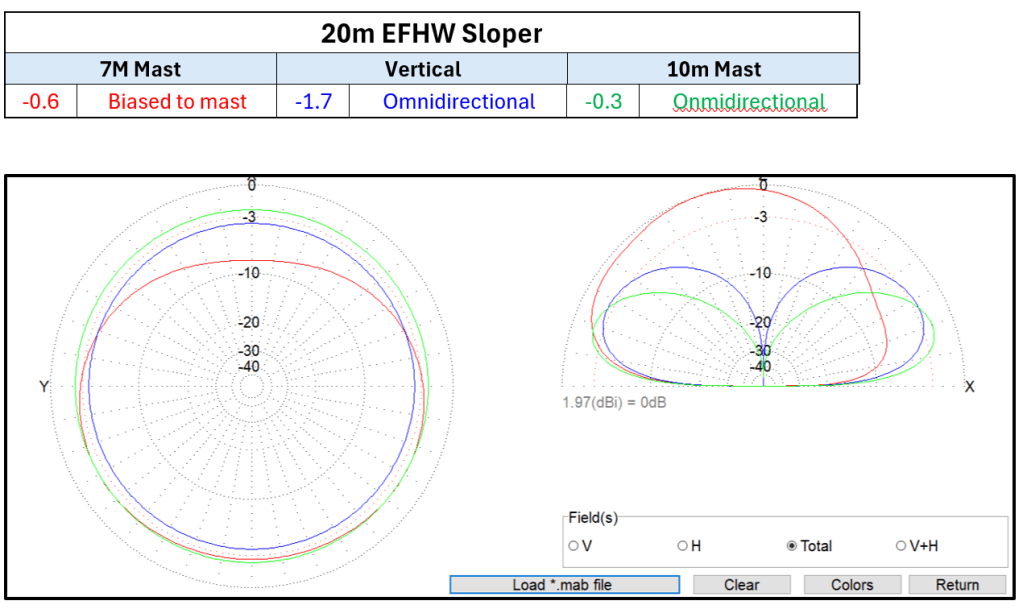
The Conclusion
So, what did we learn? First, I learned this much data is a pain in the butt and I wish I had the same big ol’ monitors like I have at work.
Second, I learned that perceptions evolved over hundreds of activations have skewed my instincts. That it might be worth it to check the math now and again. But, in the end, maybe big differences in models aren’t that big in the park.
Finally, I learned it looks like there’s a reason the old timers answer every question with “dipole”.
What are your take aways?
TU ES 73,
Mark
KA5TXN


Leave a Reply