We’ve all had or sat in on conversations about procuring material for our stations. It’s like a weeping sore, always needing care in the form of feed lines and adapters. If we’re the slightest bit “crafty” we need wires and toroids, capacitors, and any number small electronic components to shape and direct our circuits.
In most conversations you’ll hear the admonishment, “Don’t by that junk on Amazon. It’s really lossy and it’s made in China”. “Really Lossy” That right there is enough to scare this QRP guy. So, I’ll buy from Amazon for those components I’m going to sacrifice to learning. Once I can assemble things without destroying them, it’s off to Google to find the reputable manufacturers, then DigiKey for some quality components.
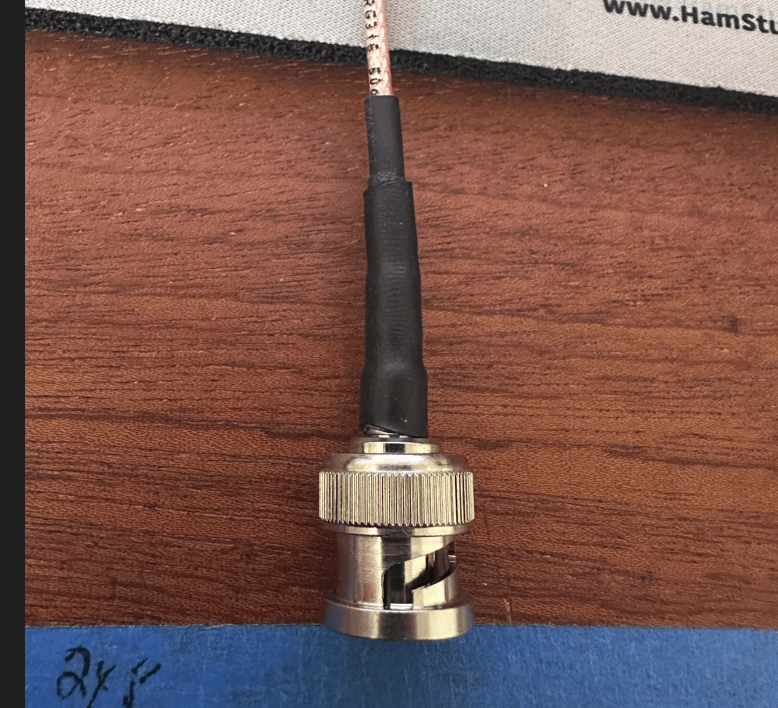
For feedline, I’ve been an ABR Industries guy. They’re affordable if you’re thinking long term, they’re Texans, and K4SWL Thomas Witherspoon likes them. Good enough for the QRPer, good enough for me. So in my mind, ABR is the standard for feedline, like the dipole is for antennas.
Buuuuuut, It’s hard to beat Amazon for convenience. They don’t mean “next day” when they say it anymore, but it’s still really quick. And they’re right there on your phone so you can spend money any time of day or night.
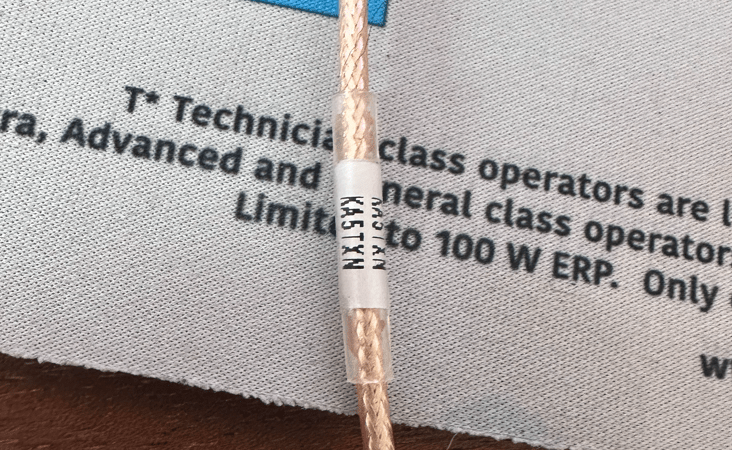
So I ordered 100 feet of RG-316 coax from Amazon when I decided to scratch the itch of DIY feedlines. You know that incredibly belligerent attitude four-year-olds get when they insist on doing things themselves. All we can do is sit quietly during that developmental phase where they twist and flail, scream and cry in frustration because they can’t peel off wet socks. I never grew out of that.

A few videos and and much trial and error later, I can make a decent feedline with RG-316 and BNCs. But it’s all just practice stuff. Nothing anyone should actually use. Being made from Amazon coax, it’s just too lossy. Everybody knows that…. right?
But is it though? Is it really?
I built two feedlines, one from Amazon sourced RG-316 and one from ABR sourced -316. The following table represent loss in the form of the difference between measured gain in and out. The vertical axis is decibels of loss, and the horizontal axis is frequency.
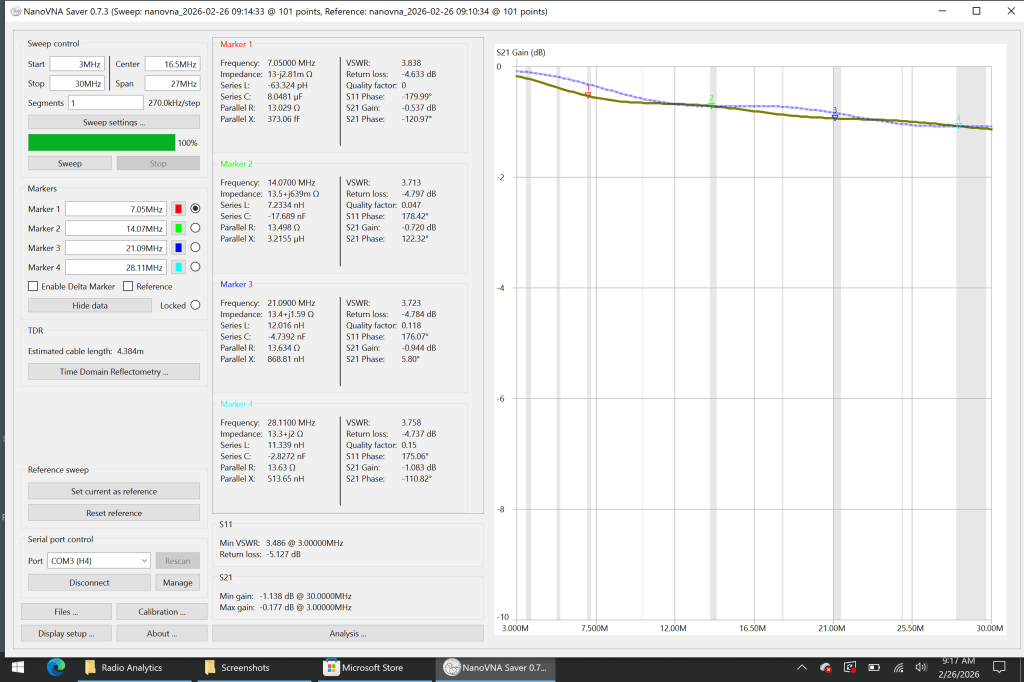
The green line is Amazon and the blue, dotted reference line is the ABR coax. At 40m, the Amazon stuff looks about .1 dB lossier than ABR. That’s about 2 watts from a 10 watt rig. The other noticeable delta is a 15 meters where the delta is about half that of 40 meters. 10 watts will sound like 9.
So what’s this tell us? Well, everyone is right, the Amazon junk is lossier. And the less power you put into it, the less will make it out. I sound a little like that master of the obvious John Madden, “The winning strategy is the one that scores more points.” But, it really is that simple. The hard part is deciding what “less” means to you, your mode, and your rig.
For me, I can math up what it means to my QRP situation where a 10% loss of 3 watts leaves a measly 2.7 watts to get the work done. But at the same time, a few more sunspots will skip those 2.7 watts around the world.
I’m left thinking two things. How will ABR compare to ABR? And, I need to learn to fiddle with RG8X.
TNS ES 73
KA5TXN
Mark

 DitWit Portable Radio
Leave a comment