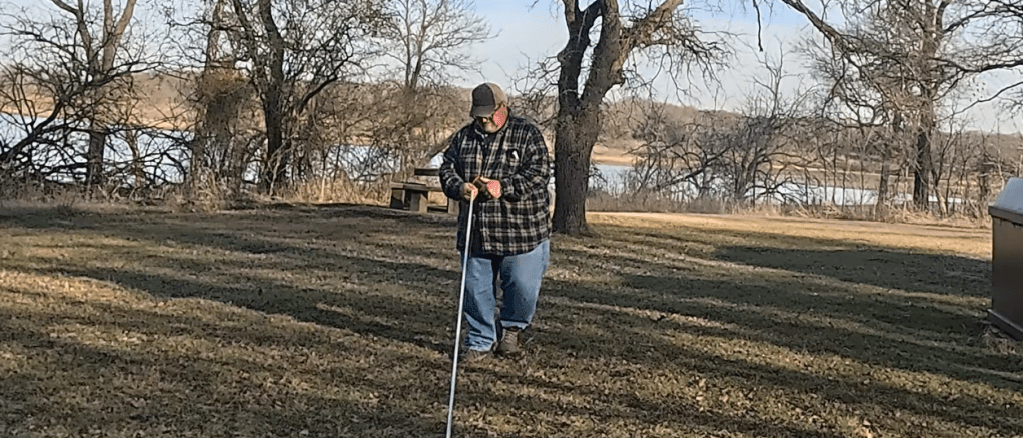
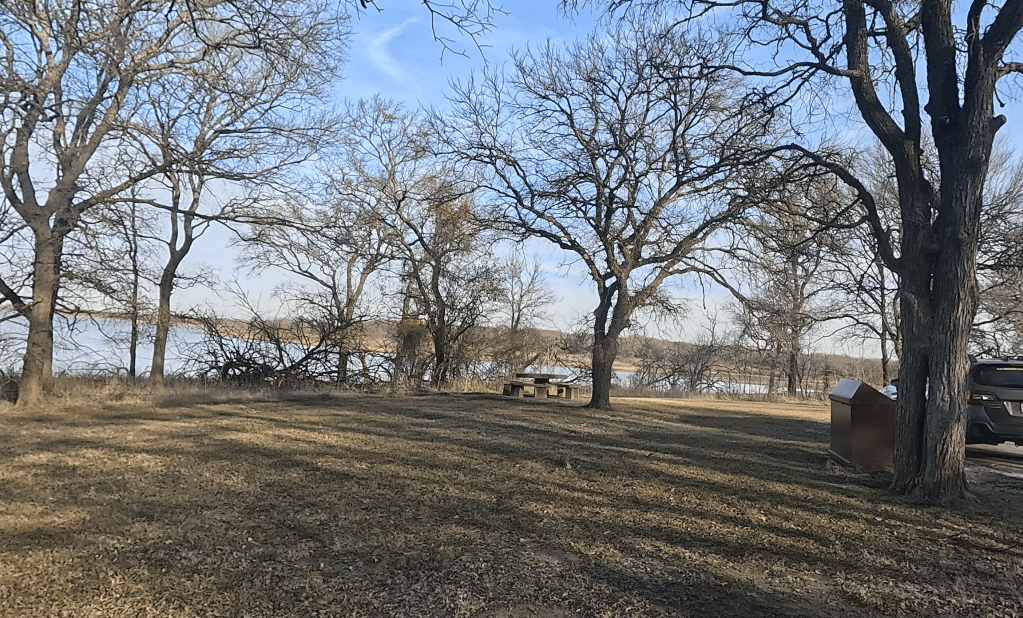
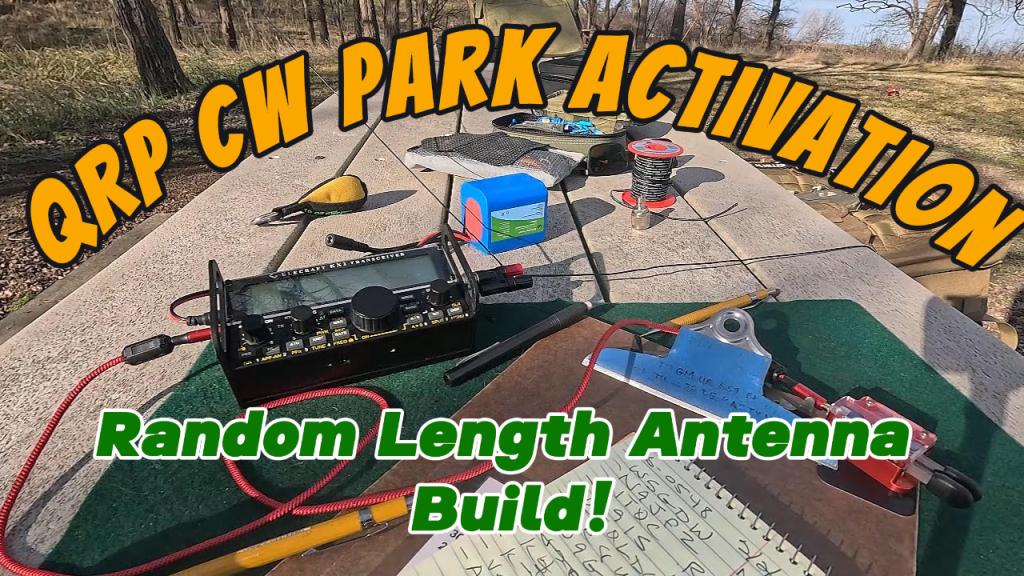
Spring is springing, and the weather this morning did not disappoint. W5DRT, David, joined me at the day use area of US-0548 Hagerman National Wildlife Refuge. Normally, I’d grab 10 quick Q’s then get out of the way for SSB bidness, but I wanted to try an antenna and film it.
The idea is a version of a “long wire” antenna. Most commonly, hams refer to long wire antennas as non-resonant wire antennas fed directly by the rig – no feedline, no unun, no transformer. Ol’ Reliable is an 84′ radiator and a 17′ counterpoise. It’s always caught my attention as the ultimate in EMCOMM simplicity. A feller could breakdown the wires in a vacuum cleaner cord and get on the air.
While there are resonant versions of wires you can poke into your rig like a simple lamp cord dipole, my intention was a multiband antenna that would rely on the internal ATU in my KX2.
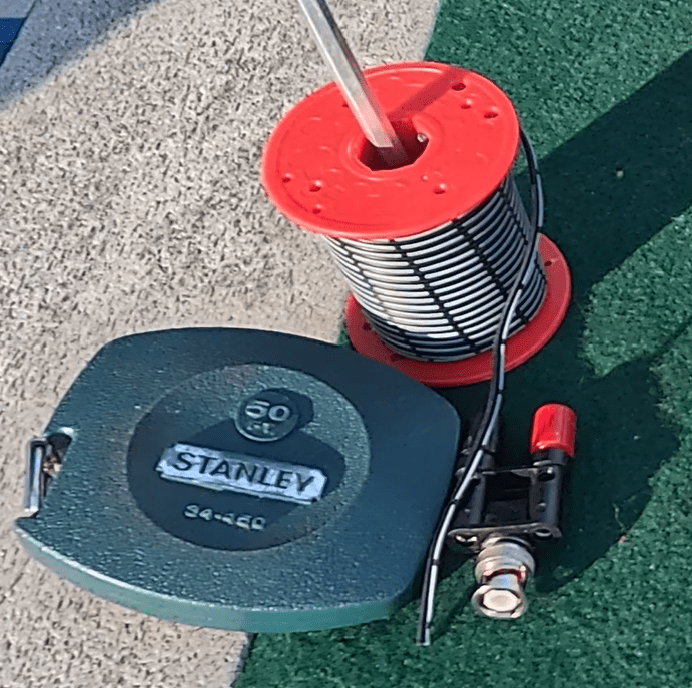
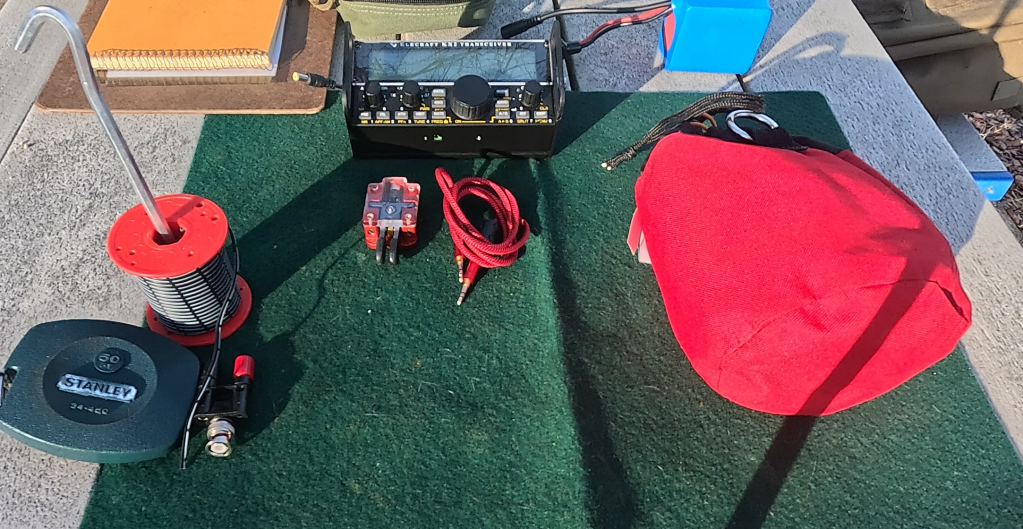
The materials are: 28.5 feet of lamp cord and a BNC binding post adapter. I used 26ga Silicone ribbon cable (2P). Ribbon cable refers to single, insulated, wires joined together, side-by-side, to make a single, flat-like-a-ribbon cable. In the case of this 2P cable, think of two wires – like the power cord for a lamp or speaker wire, but tiny.
The build is simple:
- Measure 28.5 feet of cable.

2. Separate the two wires.
3. Strip one end of both wires.
4. Attach the stripped ends to the red and black on a BNC binding post adapter.
Red is the radiator, black is the counterpoise.
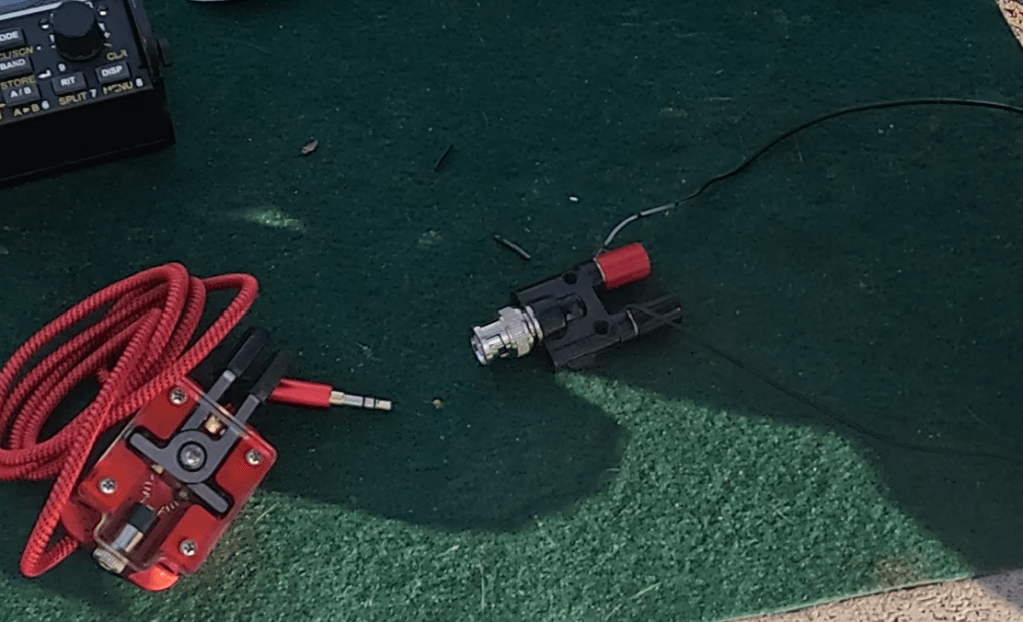
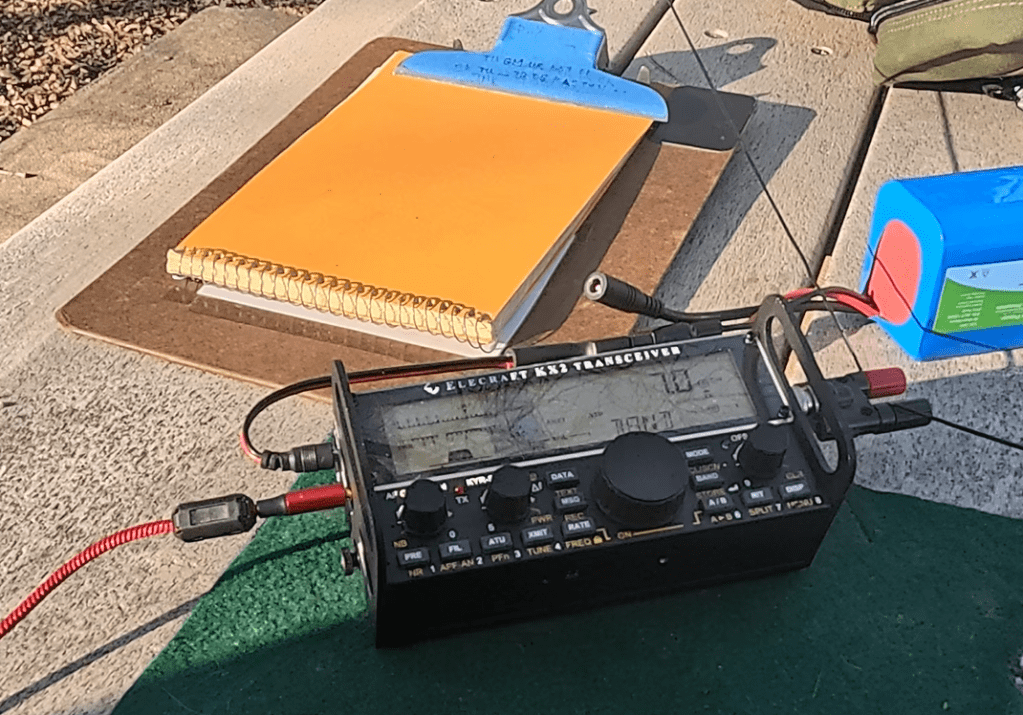
4. Attach the binding post adapter to you rig where you normally attach feed line.
5. Raise the radiator with a tree or mast like you would any other wire antenna.
6. Lay the counterpose on the ground ….. like a counterpoise.
IT WORKED! My KX2 tuned it from 40-10 and everything in between.
Gear Loadout:
- Elecraft KX2
- Bioenno LIPO
- Bamakey TP-III Morse code paddles
- 28.5’ 2P Ribbon Cable (26ga)
- BNC binding post adapter
Activation:
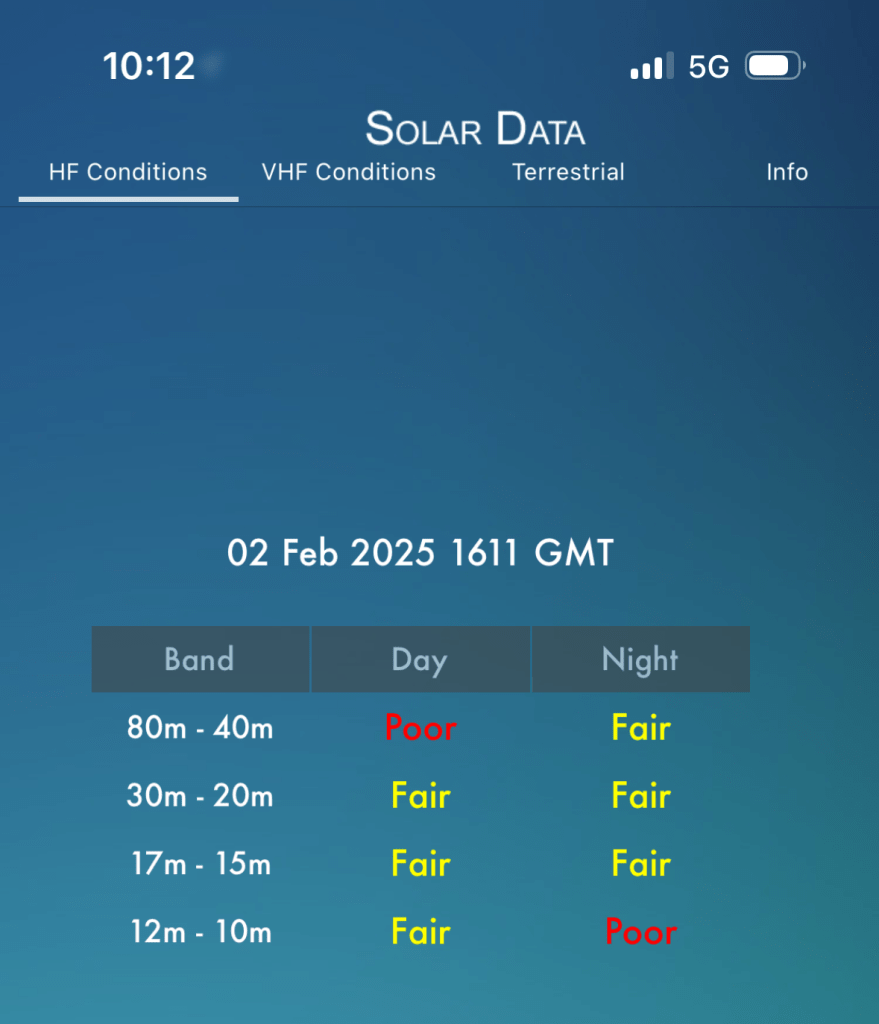
The day was beautiful, but solar conditions weren’t great. For the most part, I really struggled to hear. I’m confident it wasn’t this improvised antenna. I’d used the same configuration the day before and it sang like Pavarotti. More, towards the end of the activation, I switched to a familiar 20m EFHW and heard no improvement. The takeaway is, I lucked into hazy conditions for rolling out a new antenna.
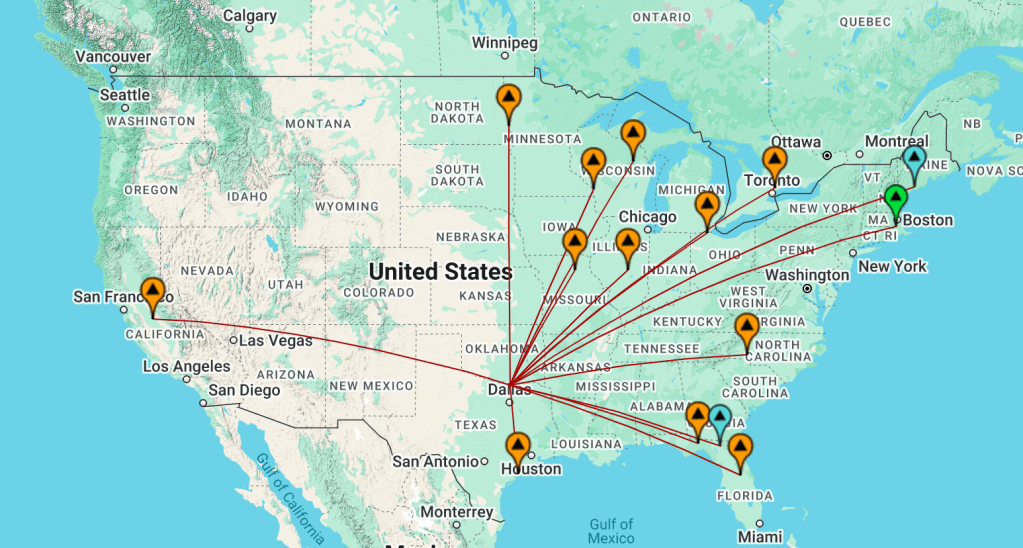
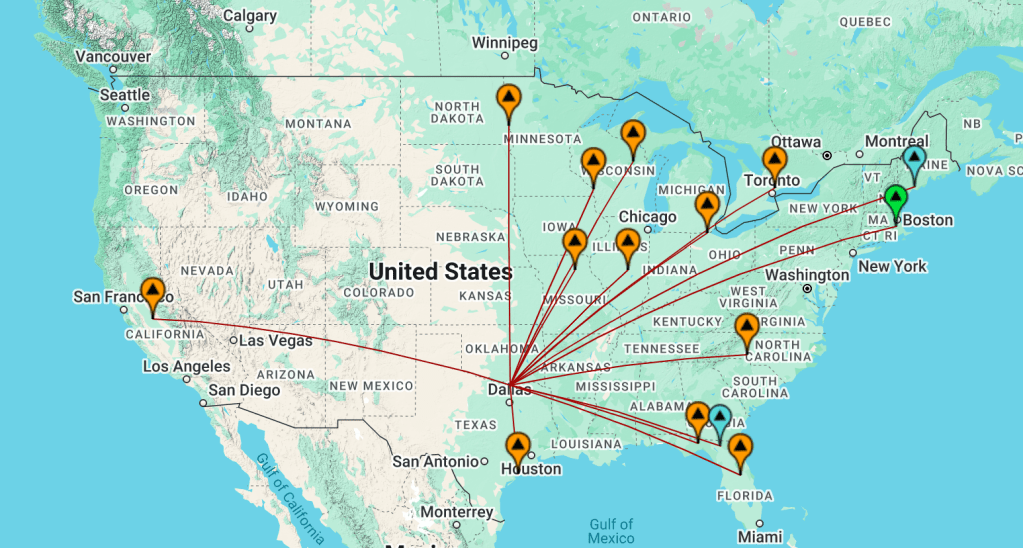
I tuned up, called QRL a few times, then sent CQ POTA. First to come back was W5GDW in North Carolina. Like I mentioned before, it was quiet. As if there was a giant attenuator between me and the hunters. Very little QSB, just muted.
The next 27 minutes brought 11 more contacts including Ontario, Idaho, and North Dakota. Idaho and North Dakota don’t show up for most activations so I was pleased to get them in the log.
I hopped to 15 meters and got Maine and Florida, then to 10 meters and QSO’d with Massachusetts.
It was a good activation. Slow because of the solar conditions, but that was offset by using an interesting and new-to-me antenna system… THAT WORKED!
You should see a video publish in a week or so. www.youtube.com/@DitWitPortableRadio
For me, portable operations are about experimenting. I tend to focus on the operation and feel like I miss out on trying new things, experimenting. Sometimes I have to remind myself that it’s the learning that’s at the corps of this hobby’s joy.
As always,
TNX ES 73
KA5TXN
DitWit

 DitWit Portable Radio
Leave a comment