CW – The Long Game

Don’t give up – it’s a long game.
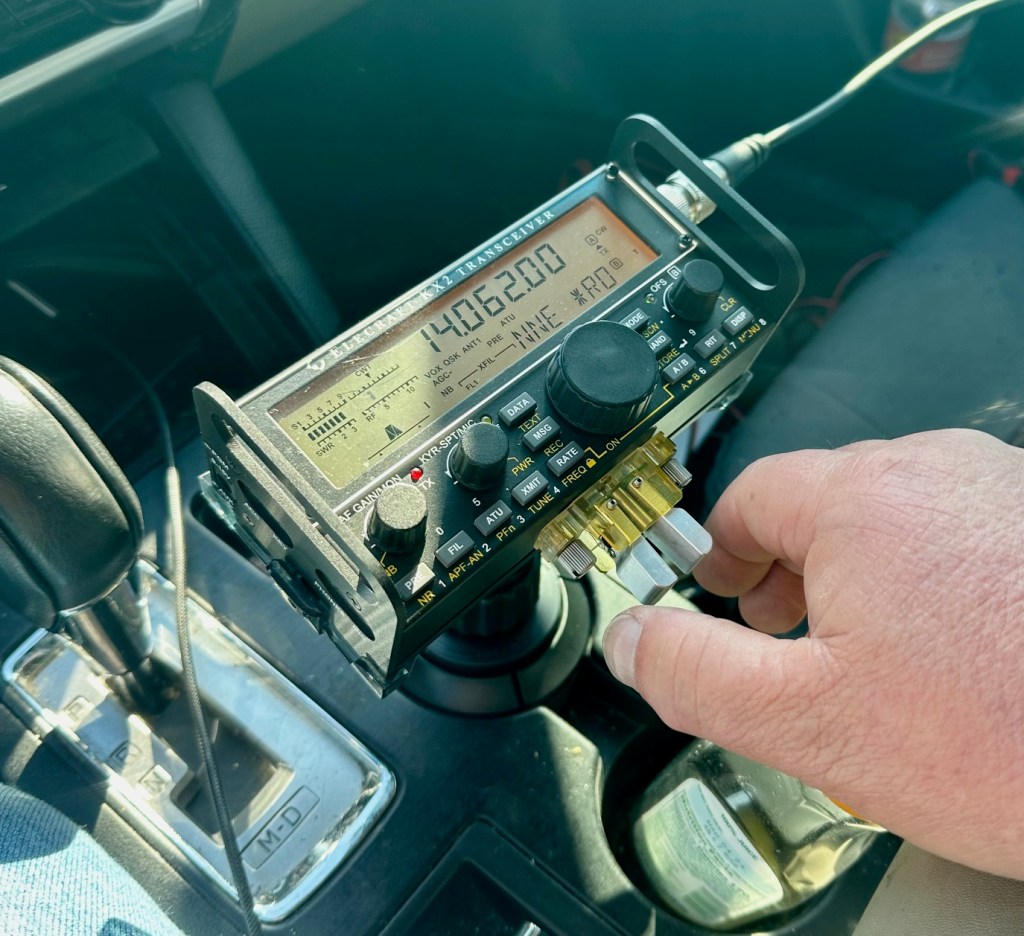
I took two CW courses offered by my club, a beginner’s and an intermediate level course.  The first course, the beginner course, was well attended.  Started with about a dozen folks and winnowed down to six or so.  Two of us moved on to the intermediate course and I wonder what happened to the others.  I’m afraid the experience for them is gradually migrating over to the loss column – thinking, “I tried Morse Code but just couldn’t get it, I’m not a CW kinda guy.”

Learning morse code is hard.  Not hard in the sense of digging ditches, but hard in the sense of time and commitment.  While the course gave the impression it would “teach” morse code, it didn’t.  I’m convinced that while a course can offer the structure for learning, the learning part lands firmly and solely on the student. 

We might think of the military course, 20 wpm proficiency in some weeks, but it still came down to the commitment and dedication of the students.  Having spent a few minutes in the military, I’m convinced that the success of the instruction was the result of the instructor’s ability to control the student’s commitment.  They had the students for eight or nine hours each day and enjoyed the authority to apply “persuasive techniques”.    An adage in Marine Corps schools was, “You can be smart, or you can be strong”. Watching the “slow” students run until they collapsed inspired me to take the smart path and study at night.  In artillery school, they’d run carrying a 98-pound dummy projectile while an instructor screamed, “Dummy rounds for dumb Marines!”  It worked.

While those techniques of military instruction won’t work on a class of volunteer Hams, the path to achievement is the same.  We have to earn the language – earn the skill.  Anyone can do it, it just takes time.  The more committed the effort, maybe the less the time, but time none the less.

I’m writing to appeal to our students who fell by the side.  It’s time to restart.  All it takes is a phone, ear buds, and time.  Put in some earbuds, browse your phone of to the Morse Ninja videos, pick the single letter alphabet videos and learn your ABCs.  You need about 30-minutes a day.  You can take it in 10-minute chunks but strive for 30-minutes every day.
Think of your day and pick those mindless moments where you’re not thinking of anything – throwing the ball for the dog, vacuuming the carpet, making your bed, folding your laundry.  There’s many things you do every single day just because you’re human; lay some morse code on top of those times.  I’m convinced it’s not aptitude, how smart you are, or how hard you try … it’s just time.

Time to restart.

TNX ES 73
KA5TXN
DitWit

KA5TXN Avatar

Published by

Categories: ,

4 responses to “CW – The Long Game”

  1. drturner49 Avatar
    drturner49

    You hit the nail on the head. It takes a personal commitment to apply the required time and effort to learn the language. Nothing more.

    Liked by 1 person

  2. famousnoisily2dbd6124e8 Avatar
    famousnoisily2dbd6124e8

    I’ve read your “Learning CW” post several times and I agree with all.

    I believe that some of the reasons for the decline in the use of CW include:

    1.
    The younger population want it NOW; consequently don’t see/imagine themselves dedicating the time to learn. I could rephrase; folks are lazy!
    2.
    CW may be seen by some as an antiquated mode and they would be right. Some folks see this as appealing while others see it as appalling.

    There are other reasons; these two are the primary…from my thinking.

    I THINK our responsibility (and you’ve done a good job in your post) is to ‘sell’ (promote) CW. It’s hard to do though.

    Benefits of CW (what’s-in-it-for-me) can become “selling points”:

    *
    CW bandwidth is 100 hz while SSB is 2500 hz (USB + LSB). Modes do not transmit equally and 2 factors affect range including transmitter power (sending station) and receiver sensitivity (receiving station) (disregard propagation for this writing). Since the bandwidth of CW is well less than 10% of SSB, common sense tells the signal will be heard at a farther distance as compared to phone/SSB. I can throw this little rock farther than you can throw that big rock. This common sense I mention is argued by some HF gurus however.
    *
    CW portions of bands are ‘quieter’ and certainly less congested making it easier to complete a QSO. A no brainer.
    *
    For a newbie getting into ham radio, money is almost always an issue. My point here is that you can get into ham CWing, using <10 watts and a wire at a very low cost.
    *
    Reality is the digital modes PSK, JT65, FTs and so forth are MORE efficient than CW. Our younger population generally are more computer savvy than the older generation thus the popularity of the digital modes.

    Learning CW:

    *
    You’re right…it takes an absolute commitment – no doubt! Lots of folks have read the Bible cover to cover – the commitment is similar.
    *
    Folks learn differently. I used recordings and would send the letter on an oscillator after hearing it. Others want video. Some want hands-on with an instructor but even those with an instructor have to spend some alone time to learn CW.
    *
    Your statement, “While the course gave the impression it would “teach” morse code, it didn’t. I’m convinced that while a course can offer the structure for learning, the learning part lands firmly and solely on the student” is dead nut on.
    *
    As you’ll well know, folks learn at different paces. I believe that often the pace correlates with the person’s age. I learned CW very quickly at the age of 25 – if I had to learn it today, it’d take much longer which would lead to frustration which might result in total failure (I quit!).

    I’ve gotten lengthy – sorry.

    Our job is to promote CW when possible. Recall when the Scouts sent their names on the key from the alpha CW list you wrote on the blackboard – the Scouts were all over that!

    I’ll always believe that the ARRL did a disservice when they rallied with the FCC to do away with the CW requirement for licensing. I understand why it was done and, for that reason, maybe the decision was rational.

    I would have rather seen a no-code license with allocated HF/VHF/UHF frequencies and then (to upgrade) a CW requirement.

    My response to your dit-wit blog. Apologies for the rant.

    73,

    M

    Liked by 1 person

    1. KA5TXN Avatar

      Thank you very much for taking time to leave this comment. We obviously agree! Many opine there’s a resurgence of CW operators that I think has been driven by COVID lockdowns, the popularity of POTA/SOTA, and YouTube. I’m a “volunteer key”, having licensed long after the requirement was dropped, but I’m an exception to my “generation” of new licensees.

      And you’re right, digital is easier, popular, efficient, and instantly attractive to Hams, young and old. It’s instant and easy – the hardest part being figuring out your COM Ports. I droned along on FT8 for some 8000 POTA QSOs before I started learning the key (age 59).

      I think learning Morse is just too much for many. You can’t buy it or watch some videos to configure it. The ABCs are easy, but burning in those neural pathways in your brain takes a lifetime compared to figuring out a digital mode.

      Thanks for taking time to write and 73

      Like

  3. aceynpasquariello1990 Avatar
    aceynpasquariello1990

    wow!! 12Hurricane Helene – Big Boost for Ham Radio … at my house.

    Like

Leave a comment