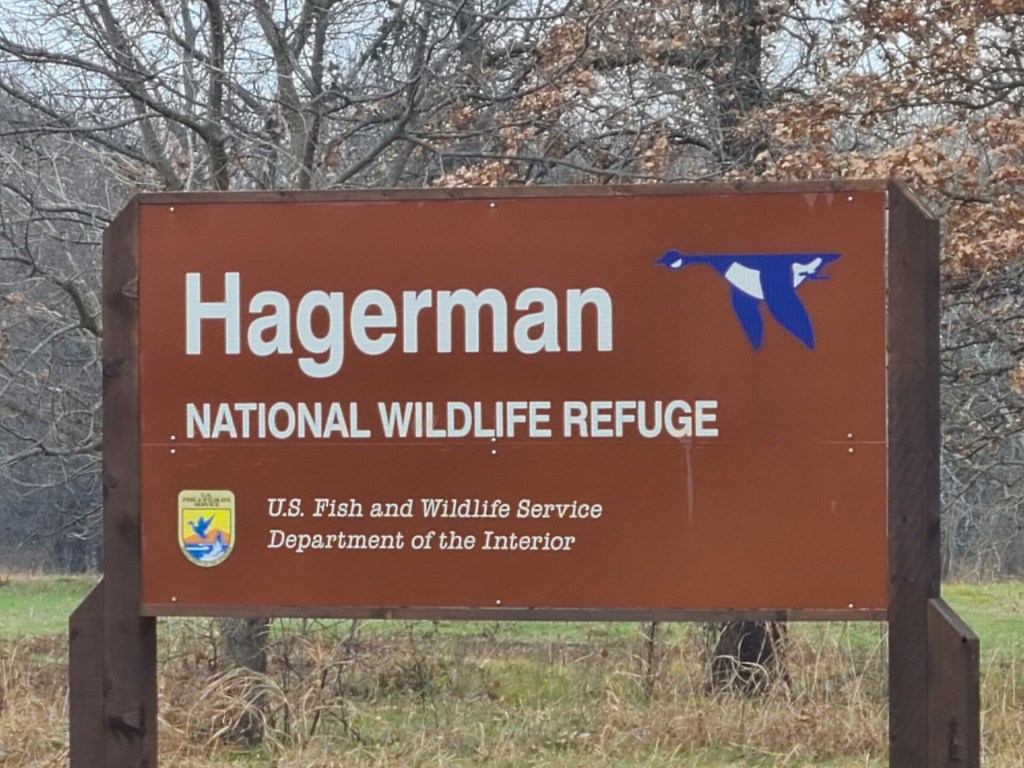
The Hagerman National Wildlife Refuge is my “home” park and this activation was my 57th, there. It’s beautiful, but in a wetlands kinda way and through my POTA eye, it’s accessible (no gate), has decent antenna trees, is seldom crowded, and is just 40 miles from home.
From their website:
Hagerman National Wildlife Refuge was established in 1946 to provide habitat for migratory birds, wildlife, and plants native to the area. The 11,320-acre refuge is an overlay of the Big Mineral Arm of Lake Texoma. Shallow marshes, creeks, bottomland hardwoods, forested uplands and grasslands, and managed farm fields provide habitat for more than 300 species of birds and many varieties of wildlife. Western areas of the refuge are within the unique Cross Timbers Ecoregion which features stunted, gnarly-shaped post oak and blackjack oak trees that are much older than they appear.
Around 230,000 visitors annually come to the refuge for wildlife observation, photography, hiking, fishing, hunting, and interpretive and educational programs.

I spent some time fiddling with antennas, trying a new Packtenna 20m EFHW. They conveniently terminate their radiators with mini- banana plug and their 40-10 model has been out of stock. So, I cut another 20m element, soldered on a mini banana male and headed to the park with a linked EFHW.
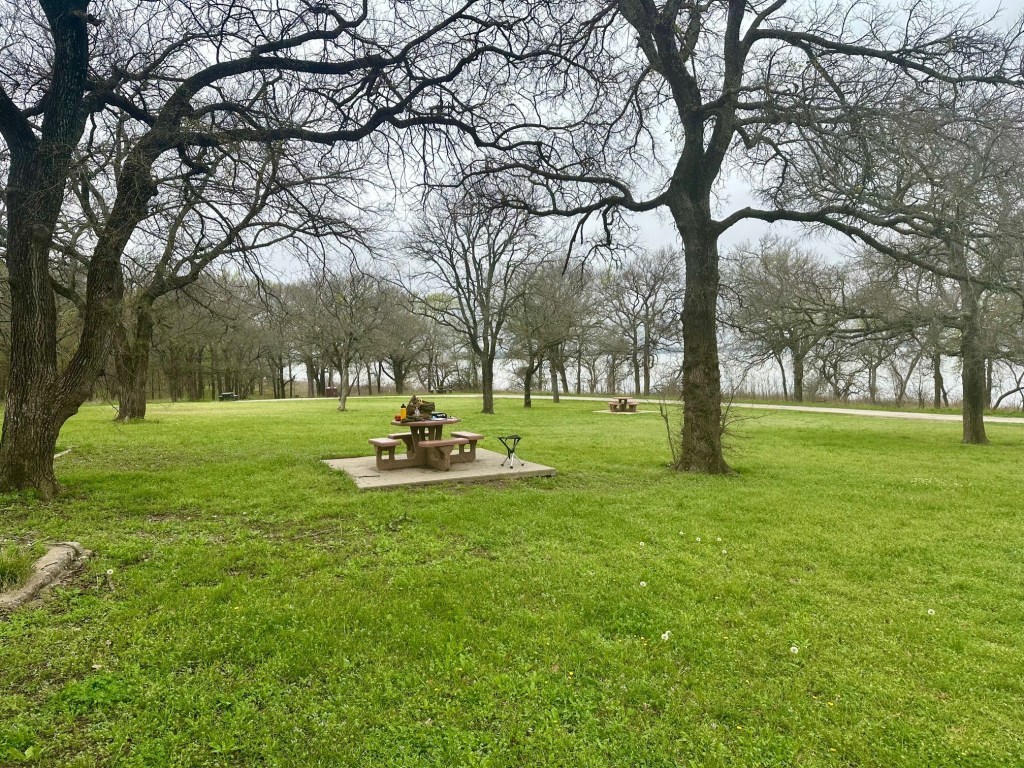
The Day Use picnic area was soggy, we’d had two inches of rain in the days before, and the grass was sock-soaking wet. Here’s the antenna fiddling part – First, it took multiple tries to get my line in the tree. By golly, I wanted that exact part of that tree and nothing else would do. It took four throws, and when I got it, I didn’t like it. Normally, I’ll take a tree over a mast any day – deploying in a tree is faster and my throw bag packs smaller and lighter than my mast, guys, and stakes. Not today, DitWit.
The rest of the fiddling involved 1:9 SWR from that dang, overpriced, store bought antenna. I couldn’t bring it down, and I’m pretty sure I caused it. My normal deployment involves tying in the wire on my throw line, dropping the winder and letting it do the “winder dance” while I hoist the other end of the line. I suspect I soaked the BNC connector by letting it dance in the wet grass. There might be a lesson for me in here somewhere.
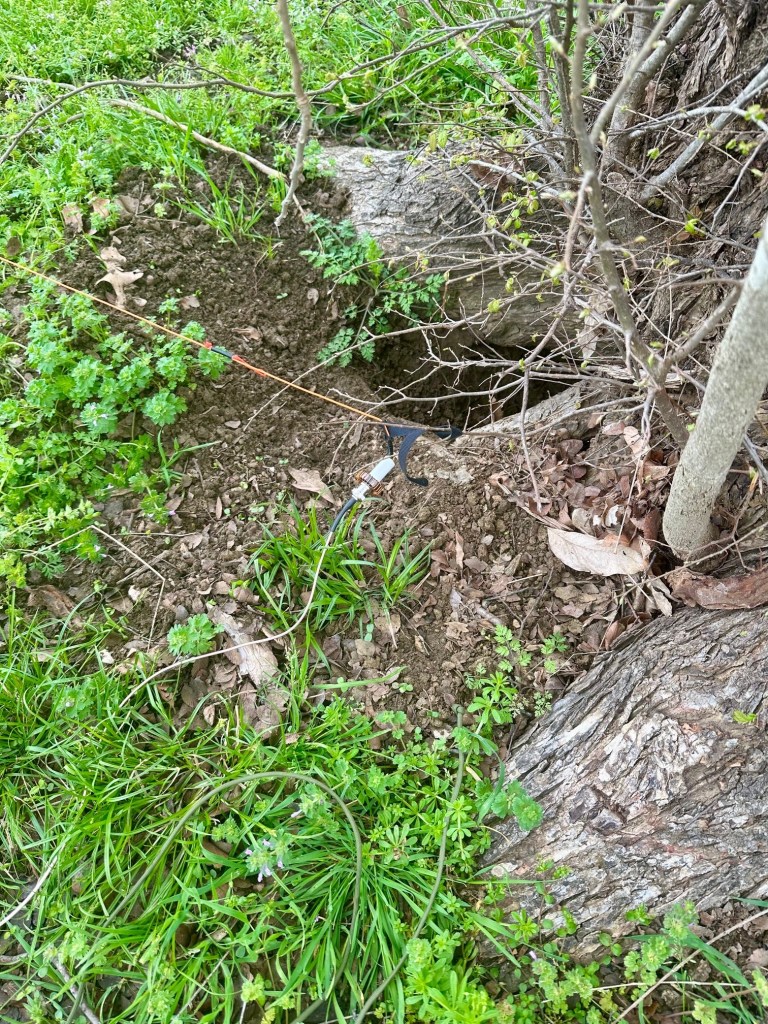
I brought it back down and switched over to my usual 40-10 wire and Sparkplug 49:1 unun. The Sparkplug 49:1 is a fantastic transformer that’s never let me down. I have the 50w version, it’s small, durable, and seems to have the best results on or very close to the ground, which is convenient. I tied the feed point to a twig, about 2 inches off the ground, and it gave me its usual 1.2:1.
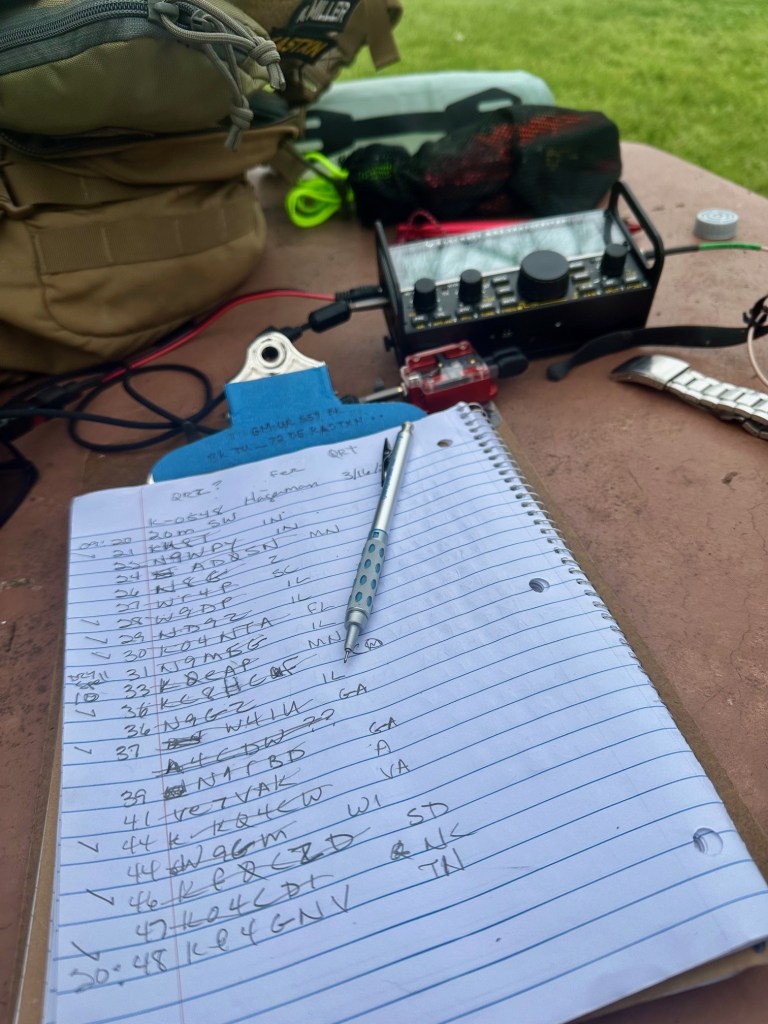
Setting up on a picnic bench, I QSL?’d, and at 09:20 local, started calling on 20m with 5 watts. KU8T, Tom Rupp, in Indiana came right back. I causally call him Tom as if we’re friends. I’ve never met him, but we’ve made enough park contacts that I recognize when he comes by. If you every read this Mr. Krupp, I apologize for this undue familiarity – no one else reads this.
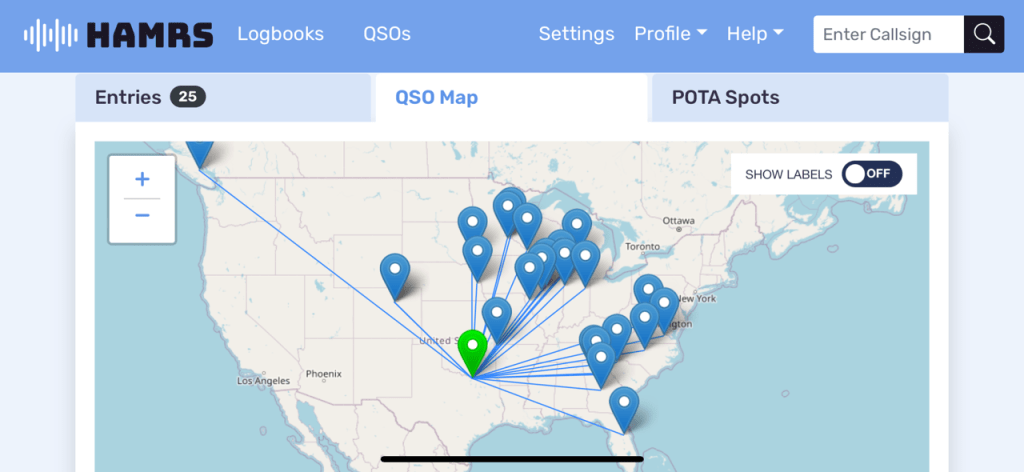
In my best Jeff Spicoli imitation, there were “tasty waves” on 20 this morning. I was getting out well with 5 watts and heard little or no QSB. I made 21 contacts in 28 minutes, including a P2P with KF0CZD in south Dakota. Not bad for Texas QRP.
I hauled in my 40-10, raised my Packtenna random wire and made 4 more contacts on 30 meters. Close Station.
All in all, even with the wet connector debacle, it was a great morning at the park. CW is a hoot and if you don’t know Morse Code, you owe it to yourself to learn. It’s a ton of fun and never fails.
CU AGN ES 73,
KA5TXN Mark
DitWit

 DitWit Portable Radio
Leave a comment